The Jewish calendar is more than a system for marking time. Its months, appointed times, festivals, and fast days preserve the history of Israel and commemorate events that have shaped the Jewish people for thousands of years.
Understanding the Jewish calendar can also provide important historical and biblical context for readers studying the Hebrew Scriptures.
A Note on the Hebrew Calendar
Jewish holidays are fixed to specific dates on the Hebrew calendar rather than specific dates on the Gregorian, or Western, calendar.
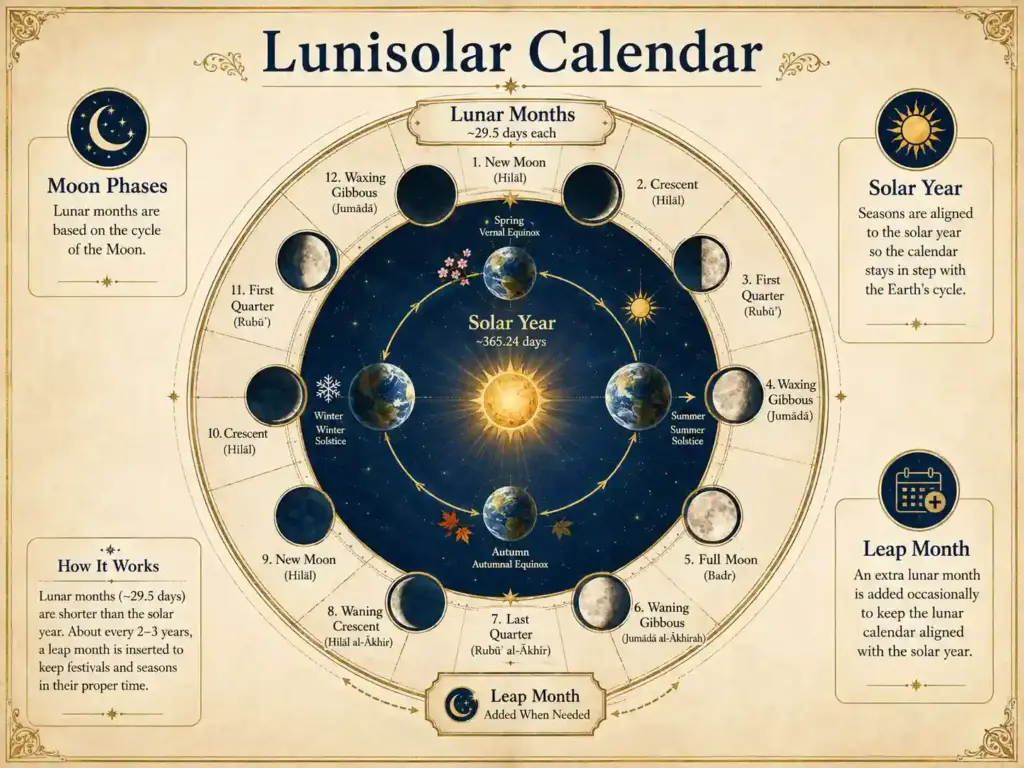
Because the Jewish calendar is lunisolar, the Hebrew months do not line up with the same Gregorian dates every year. The English months associated with Hebrew months are therefore approximate equivalents.
Jewish days also traditionally begin at sundown, meaning a holiday normally begins on the evening before its listed Hebrew calendar date.
This distinction is especially important when comparing biblical or Jewish dates with the modern Western calendar.
2026 Jewish Holidays on the Gregorian Calendar
The Hebrew calendar does not line up with the Gregorian calendar in the same way each year. Jewish holidays generally begin at sunset on the evening shown below and end at nightfall on the final date.
The dates below follow the Diaspora calendar, where the length of some festival observances differs from practice in Israel.
| Holiday | Hebrew Date | Begins | Ends |
|---|---|---|---|
| Tu BiShvat | 15 Sh’vat 5786 | Sunset, February 1, 2026 | Nightfall, February 2, 2026 |
| Purim | 14 Adar 5786 | Sunset, March 2, 2026 | Nightfall, March 3, 2026 |
| Passover (Pesach) | 15–22 Nisan 5786 | Sunset, April 1, 2026 | Nightfall, April 9, 2026 |
| Lag BaOmer | 18 Iyyar 5786 | Sunset, May 4, 2026 | Nightfall, May 5, 2026 |
| Shavuot | 6–7 Sivan 5786 | Sunset, May 21, 2026 | Nightfall, May 23, 2026 |
| Tisha B’Av | 9 Av 5786 | Sunset, July 22, 2026 | Nightfall, July 23, 2026 |
| Tu B’Av | 15 Av 5786 | Sunset, July 28, 2026 | Nightfall, July 29, 2026 |
| Rosh Hashanah | 1–2 Tishrei 5787 | Sunset, September 11, 2026 | Nightfall, September 13, 2026 |
| Yom Kippur | 10 Tishrei 5787 | Sunset, September 20, 2026 | Nightfall, September 21, 2026 |
| Sukkot | 15–21 Tishrei 5787 | Sunset, September 25, 2026 | Nightfall, October 2, 2026 |
| Shemini Atzeret | 22 Tishrei 5787 | Sunset, October 2, 2026 | Nightfall, October 3, 2026 |
| Simchat Torah | 23 Tishrei 5787 | Sunset, October 3, 2026 | Nightfall, October 4, 2026 |
| Hanukkah (Chanukah) | 25 Kislev–2 Tevet 5787 | Sunset, December 4, 2026 | Nightfall, December 12, 2026 |
| Asara B’Tevet | 10 Tevet 5787 | Dawn, December 20, 2026 | Nightfall, December 20, 2026 |
Calendar note: These dates are based on Hebcal Jewish Calendar calculations. Exact sunset and nightfall times vary according to geographic location. Ancient or biblical-era Hebrew-to-Gregorian date conversions should be regarded as approximate rather than historically certain dates.
Hebrew Months and Their Approximate English Months
Unlike the Gregorian calendar, which follows the solar year, the Hebrew calendar coordinates lunar months with the solar year. This causes Hebrew months to overlap portions of two Gregorian months.
| Hebrew Month | Approximate Gregorian Months |
|---|---|
| Nisan | March–April |
| Iyyar | April–May |
| Sivan | May–June |
| Tammuz | June–July |
| Av | July–August |
| Elul | August–September |
| Tishrei | September–October |
| Cheshvan | October–November |
| Kislev | November–December |
| Tevet | December–January |
| Shevat | January–February |
| Adar | February–March |
| Adar II | March–April during Jewish leap years |
The addition of Adar II during Jewish leap years helps keep the biblical festivals connected to their proper agricultural seasons.
Major Biblical Holidays & High Holy Days
Rosh Hashanah
Hebrew Date: 1–2 Tishrei
Approximate Season: September–October
Rosh Hashanah is the Jewish New Year. It is traditionally a time for introspection, repentance, prayer, and the sounding of the shofar.
In 2026, Rosh Hashanah begins at sunset on September 11 and concludes at nightfall on September 13.
To explore the meaning and traditional sounds of the shofar used during the High Holy Days: Continue with Shofar Blowing for a closer look at its connection to repentance, Sinai, Rosh Hashanah, Yom Kippur, and redemption.
Yom Kippur
Hebrew Date: 10 Tishrei
Approximate Season: September–October
Yom Kippur is the Day of Atonement and is regarded as the holiest day of the Jewish year. It is traditionally marked by fasting, repentance, prayer, and reflection.
In 2026, Yom Kippur begins at sunset on September 20 and ends at nightfall on September 21.
Sukkot
Hebrew Date: 15–21 Tishrei
Approximate Season: September–October
Sukkot, the Feast of Tabernacles, is a biblical pilgrimage and harvest festival associated with temporary shelters called sukkahs.
In 2026, Sukkot begins at sunset on September 25 and continues through nightfall on October 2.
Shemini Atzeret
Hebrew Date: 22 Tishrei
Approximate Season: September–October
Shemini Atzeret means the “Eighth Day of Assembly.” It immediately follows the seven days of Sukkot.
In 2026, it begins at sunset on October 2 and concludes at nightfall on October 3.
Simchat Torah
Hebrew Date: 23 Tishrei in the Diaspora
Approximate Season: September–October
Simchat Torah means “Rejoicing in the Torah.” It celebrates the completion of the annual Torah-reading cycle and the beginning of a new cycle.
In 2026, Simchat Torah begins at sunset on October 3 and ends at nightfall on October 4.
Pesach — Passover
Hebrew Date: 15–22 Nisan in the Diaspora
Approximate Season: March–April
Passover commemorates the liberation of the Israelites from slavery in Egypt. Its observances include the Seder meal, the telling of the Exodus story, and the removal of leaven.
In 2026, Passover begins at sunset on April 1 and ends at nightfall on April 9 according to the Diaspora calendar.
Shavuot
Hebrew Date: 6–7 Sivan in the Diaspora
Approximate Season: May–June
Shavuot is the Feast of Weeks. It is associated with the grain harvest and, in Jewish tradition, with the giving of the Torah at Mount Sinai.
In 2026, Shavuot begins at sunset on May 21 and ends at nightfall on May 23.
Israel and Diaspora observances: Some observances differ in length between Israel and Jewish communities in the Diaspora. Simchat Torah may be combined with Shemini Atzeret on 22 Tishrei. Passover is observed for seven days in Israel rather than eight, while Shavuot is observed for one day rather than two.
Rabbinic & Minor Holidays
Not every observance on the modern Jewish calendar originates directly from commandments in the Torah. Some developed from later events in Jewish history and tradition.
Hanukkah
Hebrew Date: 25 Kislev–2/3 Tevet
Approximate Season: November–January
Hanukkah, also called the Festival of Lights, is an eight-day celebration commemorating the Maccabean revolt and rededication of the Second Temple.
In 2026, Hanukkah begins at sunset on December 4 and concludes at nightfall on December 12.
Tu BiShvat
Hebrew Date: 15 Shevat
Approximate Season: January–February
Tu BiShvat is known as the “New Year for Trees.” It is associated today with trees, agriculture, the environment, and the fruits of the land of Israel.
In 2026, Tu BiShvat begins at sunset on February 1 and ends at nightfall on February 2.
Purim
Hebrew Date: 14 Adar
Approximate Season: February–March
Purim commemorates the deliverance of the Jewish people from Haman’s plot in ancient Persia, as recorded in the Book of Esther.
In 2026, Purim begins at sunset on March 2 and concludes at nightfall on March 3.
Lag BaOmer
Hebrew Date: 18 Iyyar
Approximate Season: April–May
Lag BaOmer is the 33rd day of the counting of the Omer and is traditionally observed as a break during a period of mourning.
In 2026, Lag BaOmer begins at sunset on May 4 and concludes at nightfall on May 5.
Tu B’Av
Hebrew Date: 15 Av
Approximate Season: July–August
Tu B’Av is an ancient Jewish celebration traditionally associated with courtship and marriage.
In 2026, Tu B’Av begins at sunset on July 28 and ends at nightfall on July 29.
Jewish Leap Years
When an additional month of Adar is added to the Hebrew calendar, Purim is celebrated during Adar II, generally falling during March or April.
Historically walled cities such as Jerusalem traditionally observe Shushan Purim on the 15th of Adar.
Modern State of Israel Holidays
Several important observances were established following the creation of the modern State of Israel.
Yom HaShoah
Hebrew Date: 27 Nisan
Approximate Season: April–May
Yom HaShoah is Holocaust Remembrance Day, dedicated to remembering the millions of Jews murdered during the Holocaust.
Yom HaZikaron
Hebrew Date: 4 Iyyar
Approximate Season: April–May
Yom HaZikaron is Israel’s Memorial Day honoring fallen soldiers and victims of terrorism.
Yom HaAtzmaut
Hebrew Date: 5 Iyyar
Approximate Season: April–May
Yom HaAtzmaut is Israeli Independence Day, commemorating the establishment of the modern State of Israel in 1948.
Yom Yerushalayim
Hebrew Date: 28 Iyyar
Approximate Season: May–June
Yom Yerushalayim, or Jerusalem Day, commemorates events surrounding Jerusalem during the 1967 Six-Day War.
Major Fast Days
In addition to Yom Kippur, the Jewish calendar contains several fast days commemorating important and often tragic events in Jewish history, particularly events connected with Jerusalem and the destruction of the Temples.
Tzom Gedaliah
3 Tishrei — September–October
This fast commemorates the assassination of Gedaliah, governor of Judah following the Babylonian destruction of Jerusalem.
Asara B’Tevet
10 Tevet — December–January
The Fast of the Tenth of Tevet commemorates the beginning of the Babylonian siege of Jerusalem.
In 2026, Asara B’Tevet falls on December 20, beginning at dawn and concluding at nightfall.
Ta’anit Esther
13 Adar — February–March
The Fast of Esther is traditionally observed immediately before Purim and recalls the events surrounding Esther’s appeal for the Jewish people.
Tzom Tammuz
17 Tammuz — June–July
The Fast of the Seventeenth of Tammuz begins a traditional three-week period of mourning leading to Tisha B’Av.
Tisha B’Av
9 Av — July–August
Tisha B’Av is one of the most solemn days on the Jewish calendar. This approximately 25-hour fast mourns the destruction of both the First and Second Temples in Jerusalem along with other tragedies remembered throughout Jewish history.
In 2026, Tisha B’Av begins at sunset on July 22 and ends at nightfall on July 23.
The Calendar as a Record of Jewish History
The Jewish calendar connects worship, Scripture, history, agriculture, national memory, and the story of Israel. Some observances originate directly in the Torah, while others developed from later events in Jewish history.
The Hebrew months themselves help readers place biblical events within the agricultural and seasonal cycle of ancient Israel.
Nisan, which generally occurs during March and April, contains Passover.
Sivan, generally falling during May and June, contains Shavuot.
Tishrei, normally occurring during September and October, contains several of the most important observances on the Jewish calendar, including Rosh Hashanah, Yom Kippur, and Sukkot.
For students of the Hebrew Scriptures, learning these appointed times provides valuable context for understanding biblical events, Jewish traditions, and references to festivals throughout Scripture.
The calendar also reminds us that the biblical story did not develop independently of time, seasons, agriculture, or the history of Israel. The appointed times repeatedly call Israel to remember what Elohim has done, to examine the present, and to look toward what is still to come.
The Jewish calendar is more than a way of measuring days and years. It is an ongoing remembrance of deliverance, covenant, judgment, repentance, restoration, and hope.
For the broader Hebrew Roots framework connecting the biblical calendar and appointed times with covenant, Torah, Israel, Hebrew language, Jewish history, and Yahshua: Continue with Hebrew Roots of the Faith: Torah, Covenant, Israel and Yahshua.
To explore why remembrance, covenant, and appointed times remain part of Yashar’el’s continuing spiritual pattern: Read Yashar’el’s Journey as Covenant Instruction.
For the broader historical and cultural context behind these observances: Read The Wide Spectrum of Judaism to explore how Diaspora, history, culture, rabbinic traditions, and Messianic Judaism produced many different expressions of Jewish identity and practice.
Discover more from Rickey A. McElderry
Subscribe to get the latest posts sent to your email.