
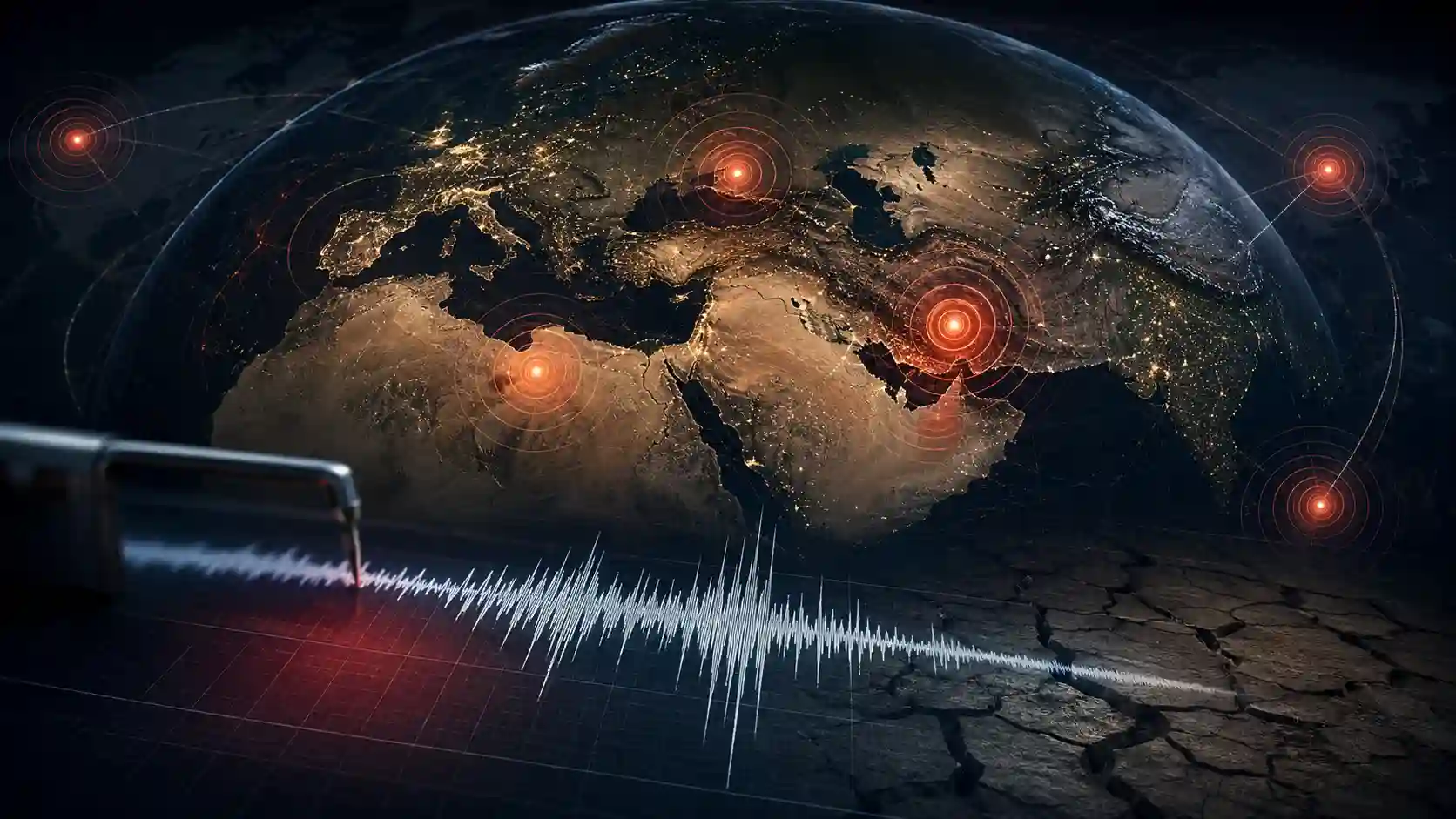
Reporting period: July 6–August 4, 2026
The past 30 days brought several significant earthquakes, renewed direct conflict involving Iran and the United States, continuing instability in Gaza and growing tensions surrounding Jerusalem. This Eastern Messiah Signs Watch report separates confirmed events from disputed claims and biblical interpretation.
The evidence supports watchfulness, but it does not justify sensational claims or a definite prophetic timetable.
1. Verified Events
Major Earthquakes
Mexico—magnitude 7.3: On July 17, a magnitude 7.3 earthquake struck approximately 52 kilometers west of Puerto Madero, Mexico, at a depth of 22 kilometers. It generated a tsunami warning, prompted more than 4,000 evacuations and reportedly damaged hundreds of homes. A magnitude 6.4 aftershock followed. This was the strongest earthquake identified during the reporting period. View the USGS event record.
Japan—magnitude 6.8: The U.S. Geological Survey recorded a magnitude 6.8 earthquake approximately five kilometers east of Uto, Japan, near the end of July. Available reports did not indicate a major international humanitarian disaster.
Additional magnitude-6 earthquakes: Significant events also occurred near the Philippines, Papua New Guinea, the Loyalty Islands, the South Sandwich Islands and Vanuatu. These earthquakes were scientifically significant, although most caused less documented humanitarian damage than the Mexico earthquake.
Earthquakes Affecting the Middle East
Western Iran: On July 19–20, two closely spaced earthquakes struck approximately 27 kilometers south of Javanrud in Kermanshah Province. USGS measured the first at magnitude 4.9 and the second at magnitude 5.2. Iranian reports described minor damage and several injuries, including people treated for stress-related conditions.
Turkey: A magnitude 5.0 earthquake struck near Malatya on July 18. Local reporting described a partial building collapse, but no large-scale disaster was confirmed.
Egypt: On August 3, USGS recorded a magnitude 5.0 earthquake approximately 36 kilometers north-northeast of Suez at a depth of 10 kilometers. Local estimates reportedly reached magnitude 5.6. Limited damage and at least one injury were reported.
No comparably large earthquake was confirmed inside Israel during this reporting period.
Iran, the United States and Regional Warfare
The most serious geopolitical development was renewed direct fighting involving Iran and the United States. U.S. Central Command reported repeated strikes against Iranian military targets during July, including operations between July 15 and July 23.
An Iranian attack in Jordan on July 17 killed at least two American service members. CENTCOM subsequently reported recovering additional unidentified remains. On July 28, American and Saudi forces struck Iran-backed militia sites in Iraq. On July 29, CENTCOM announced additional strikes against Islamic Revolutionary Guard Corps targets following attempted Iranian attacks. These are official American military statements; independent confirmation of every target and casualty figure remains incomplete. Review CENTCOM’s official releases.
Iran also reportedly interfered with commercial shipping and seized tankers in or near the Strait of Hormuz. The United Nations acknowledged attacks on ships in the strait during July.
As of August 4, Iran and Oman were discussing a possible arrangement to reopen the Strait of Hormuz using separate Iranian- and Omani-controlled shipping routes. The negotiations remained incomplete and were connected to demands concerning the American blockade of Iranian ports.
Gaza and Jerusalem
Military operations continued to cause casualties and displacement in Gaza despite the earlier ceasefire framework. Between July 8 and July 15, Gaza’s Ministry of Health reported 40 Palestinians killed and 127 injured. The United Nations Office for the Coordination of Humanitarian Affairs attributes these figures to Gaza’s health authorities rather than presenting them as independently verified United Nations counts.
On August 3, representatives working on Gaza’s disarmament agreement met with Israeli Prime Minister Benjamin Netanyahu. Israel was urged to suspend strikes while mediators pursued implementation. Israel maintained that unresolved security concerns justified continued action.
Jordan called for emergency Arab and Islamic consultations following a reported July 23 entry by more than 2,000 Jewish visitors and Israeli National Security Minister Itamar Ben-Gvir into the Temple Mount/Al-Aqsa compound. Jordan characterized the incident as a threat to the established religious status quo. Israel’s interpretation of permissible visitation differs from Jordan’s position.
2. Humanitarian Impact
The greatest continuing humanitarian burden remained in Gaza. OCHA reported continued displacement, restricted humanitarian access and declining aid coverage. Shelter assistance dropped substantially between May and June because of funding shortages.
More than 60 million tonnes of debris reportedly remain across Gaza, while only about 630,000 tonnes had been cleared from roads and essential facilities by late July. Food insecurity showed some improvement, but the United Nations warned that decreasing assistance could reverse those gains. Reported gender-based violence increased by 27 percent between the first and second quarters of 2026. Read OCHA’s July 31 humanitarian report.
The Iran-related conflict also affected American military personnel and their families, Iraqi communities near militia and military installations, commercial seafarers, regional shipping and the availability and cost of food and fuel.
The earthquakes in Iran and Egypt caused injuries and limited property damage. However, the available evidence does not indicate a disaster approaching the scale of the 2023 Turkey–Syria earthquake. The magnitude 7.3 Mexico earthquake produced the most substantial earthquake-related damage and evacuations during this reporting period.
3. Scripture and Interpretation
Yahshua’s teaching in Matthew 24:6–8 connects wars, international conflict, famine and earthquakes with the beginning of birth pains. Luke 21:11 similarly describes great earthquakes and other fearful events.
These passages make the combination of warfare and seismic activity relevant to a signs watch. However, Scripture does not authorize assigning prophetic certainty to every earthquake or military strike.
The verified conclusion is that significant warfare and earthquakes occurred during the same 30-day period. Iran, Israel, Gaza and Jerusalem remained central points of instability, while the Strait of Hormuz again became an international pressure point. These developments resemble categories Yahshua instructed His followers to watch.
The theological conclusion must remain separate: these events may be examined as part of a broader prophetic pattern, but the evidence alone does not prove that one earthquake or military operation fulfills a particular prophecy.
Primary Scripture reference: Ethiopian Orthodox Bible.
4. Sources and Confidence
Overall confidence: High for the occurrence and magnitude of the principal earthquakes and for the general existence of the military and humanitarian developments. Confidence is Moderate for disputed casualty figures, battlefield claims and unfinished diplomatic negotiations.
Primary Government and Military Sources
International and Humanitarian Organizations
Supplementary News Sources
The strongest verified conclusion is that this period contained substantial seismic activity—including one magnitude 7.3 earthquake—and a serious renewal of Iran-related warfare. The evidence supports watchfulness, but it does not support sensational claims that the earthquakes establish an immediate prophetic timetable.
Discover more from Rick McElderry
Subscribe to get the latest posts sent to your email.